
Why Some Companies Fail to Achieve Real Value from Field Team Management Systems
In recent years, managing field employees has become one of the most critical operational challenges facing companies across various sectors. Whether a company operates in maintenance, logistics, security, cleaning, distribution, hospitality, or technical services, having teams working outside the traditional office environment introduces challenges that are entirely different from managing in-house employees.
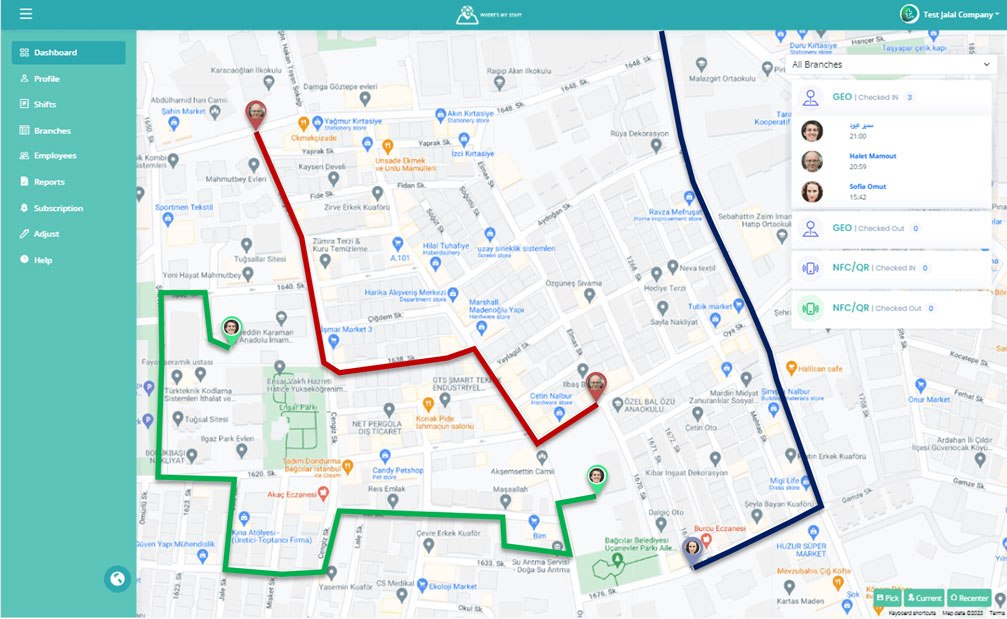
For this reason, thousands of companies have turned to adopting Field Workforce Management Systems, leveraging technologies such as GPS, geofencing, and mobile applications.
But the reality reveals something important:
Many of these projects fail to deliver the expected results.
Some companies invest in a system only to stop using it after a few months. Others use it only in a limited capacity, without achieving the real operational impact they had hoped for.
Through our experience working with companies that have field teams ranging from 10 to over 500 employees, we’ve observed that the causes of failure are often not purely technical. Instead, they are linked to how the project is implemented and the underlying philosophy behind using the system.
Reports from the Boston Consulting Group indicate that a large percentage of digital transformation projects fail due to poor execution — not because of the technology itself.
In this article, we explore the 10 most common reasons why field employee tracking and management projects fail — and, more importantly, how you can avoid them.
1. Viewing the System as Just a Monitoring Tool
One of the most common mistakes is when management sees the system solely as a tool to monitor employees.
When the system is presented to the team in this way, strong resistance often arises from employees — and they begin looking for ways to bypass it.
In reality, the true purpose of field team management systems is to:
Improve task distribution
Increase productivity
Reduce wasted time
Provide accurate data for decision-making
Protect employees themselves while working in the field
When the system is introduced as a tool for work improvement — rather than a surveillance tool — team acceptance is significantly higher.
2. Choosing a System That Is Not Actually Designed for Field Work
Not all attendance and leave management systems are suitable for field teams.
Some companies choose solutions that were originally developed for offices or factories, then try to use them in a field work environment.
But field work requires completely different features, such as:
Accurate location tracking
Working across multiple areas
Handling poor internet connectivity
Clocking in and out from job sites
Managing geographic work zones (Geofencing)
When the system is not designed for this environment, users begin to encounter practical difficulties that gradually lead to reduced system usage.
3. Poor Definition of Work Zones
In many projects, work zones are set up inaccurately.
For example:
A geographic range that is too wide
Locations that are not properly defined
Overlap between different zones
This leads to problems such as:
Inaccurate attendance recording
Errors in clocking in and out
Loss of trust in the system
Accurately defining work zones is one of the most critical success factors for any field workforce management system.
4. Insufficient Employee Training
Many companies assume that using the app is intuitive and requires no training.
But in reality, even simple applications require:
An explanation of how to use the system
Clarification of the system’s purpose
Guidance on the different scenarios employees may encounter
Failure to provide clear training leads to:
Errors in usage
Misunderstanding of the system
Low commitment to using it
5. Lack of a Clear Operational Policy
The system alone is not enough.
For the project to succeed, there must be a clear operational policy that defines things like:
When to clock in
When to clock out
How to handle errors
What happens when an employee forgets to record attendance
Without these policies, the system becomes just another app with no real impact.
6. Ignoring GPS Accuracy and Location Data Quality
Tracking systems rely heavily on the quality of location data.
But some projects fail because they do not take into account factors such as:
Weak GPS signal in certain areas
Tall buildings
Tunnels or enclosed spaces
Phone settings
A good system must handle these situations intelligently.
7. Failing to Integrate the System with Operational Processes
Some companies use the system only for recording attendance and leaving.
But the real value emerges when the system is connected to core operations such as:
Task management
Performance reporting
Productivity analysis
Team dispatching
When the system is integrated into daily operations, it transforms from a mere recording tool into a true field workforce management system.
8. Ignoring User Experience (UX)
If the application is:
Slow
Complicated
Battery-draining
Causing problems on the phone
Then employees will try to avoid it as much as possible.
The success of any system depends heavily on how easy the app is to use in the employee’s daily work life.
9. Lack of Management Follow-Up
In some companies, the system is launched — and then management’s role stops there.
But any operational system requires:
Monitoring reports
Analyzing data
Making decisions based on insights
Without management follow-up, the system gradually loses its value.
10. Focusing on Technology Instead of Results
The final mistake is focusing on the technology itself rather than the outcomes.
The real question companies should ask is not:
“What technology is being used?”
But rather:
Has the system helped us improve productivity?
Do we have a clearer view of field operations?
Are our decisions now based on data?
When the goal is to improve processes — not just use technology — project success becomes far more likely.
Conclusion
Field employee tracking and management projects can achieve a real transformation in operational efficiency — if implemented correctly.
However, the success of these projects does not depend solely on choosing a good technical system. It depends on:
Clarity of objectives
User training
Process definition
Management follow-up
When these elements come together with a system that is truly designed for field work, it becomes possible to turn field team management from a daily challenge into a true competitive advantage for the company.
If your company manages teams that work outside the office, choosing the right solution can make a significant difference in:
Productivity
Transparency
Service quality
Operational efficiency
And that is the true goal of modern field team management systems.