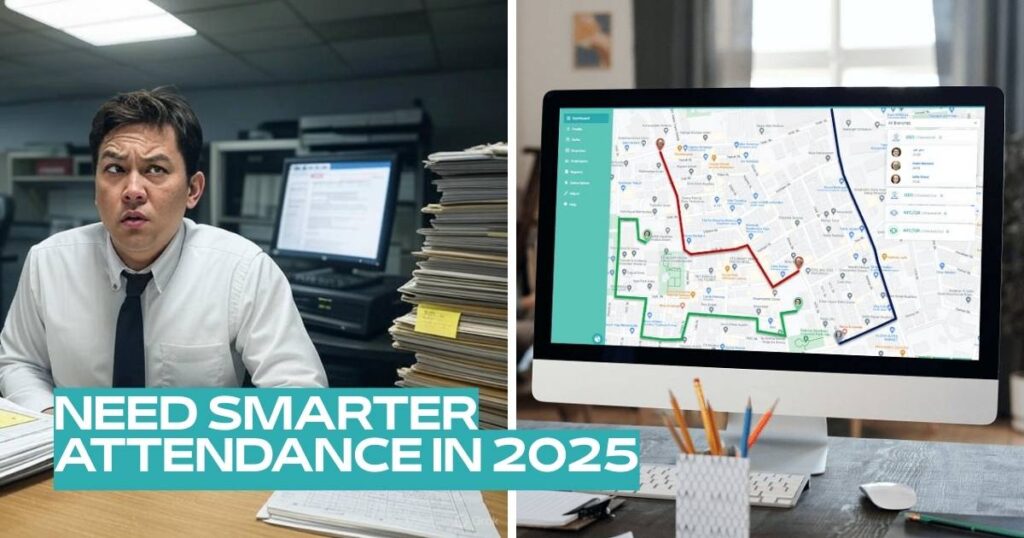

In recent years, field employee tracking and management systems have become an essential part of company operations — especially in sectors such as facilities management and maintenance, contracting, logistics, and healthcare. Yet despite this, a large percentage of these projects fail to achieve the expected results. The reason is not the technology… but rather the way it is introduced.
The Fundamental Mistake: A "Monitoring System"
One of the most common mistakes is when the system is internally presented as:
“A tool for monitoring employees”
This approach may seem logical from management’s perspective, but in practice, it leads to completely counterproductive results.
When employees feel they are being monitored:
Trust decreases
Resistance to change increases
They begin looking for ways to bypass the system
The system transforms from an improvement tool into an operational burden
In some cases, this leads to complete project failure — despite significant financial and technical investment.
Why Do Employees Reject This Type of System?
The problem is not the system itself — but rather the “mental perception” that is built around it.
When the system is associated only with monitoring, the employee interprets it as:
“They don’t trust me”
“They want to hold me accountable for every move”
“This system is against me, not for my benefit”
And that is when resistance begins — whether it is:
Direct resistance (refusing to use the system)
Or indirect resistance (incorrect usage, negligence, bypassing)
The Truth That Many Companies Overlook
Field team management systems were not designed for monitoring… but rather to create operational clarity.
And the difference between the two is enormous.
Monitoring means: tracking people.
Smart management means: understanding processes.
And that is where the real transformation lies
The True Purpose of the System
When the system is used correctly, it delivers strategic benefits, including:
1. Improving Task Distribution
Instead of assigning work randomly or based on guesswork, management gains clear visibility into:
Who is present at which location
Who has the capability to perform the task
Who has a higher workload
2. Increasing Productivity
When wasted time is reduced and resources are better allocated:
More tasks are completed
With higher quality
At a lower cost
3. Reducing Wasted Time
One of the biggest challenges with field teams includes:
Unplanned travel
Waiting time
Poor coordination
The system transforms this chaos into an organized process.
4. Providing Accurate Data for Decision-Making
Instead of relying on paper reports or estimates:
Management obtains real ground truth data from the field — which can be analyzed to continuously improve performance.
5. Protecting Employees Themselves
This is a point that is often overlooked.
The system can:
Verify an employee’s presence at a work site (legal protection)
Assist in emergency situations
Ensure that employees are not assigned tasks outside their scope or in unsafe locations
The Difference Between "Monitoring" and "Empowerment"
Monitoring
Focuses on the person
Builds fear
Reduces collaboration
Short-term focus
Empowerment
Focuses on the work
Builds trust
Enhances collaboration
Long-term focus
Successful companies don’t use the system for control… they use it for empowerment.
How to Introduce the System to Your Team Correctly
The success of any system starts with how it is introduced — not just its features.
Here is a practical framework for implementation:
1. Start with the Goal… Not the Technology
Don’t say:
“We are going to use a system to track you.”
Instead say:
“We want to improve how work is distributed and reduce pressure on you.”
2. Connect the System to Employee Benefits
Explain how it will help them:
Reduce chaos
Ensure fair task distribution
Provide proof of the effort they put in
3. Be Transparent
Clearly state:
What is being tracked?
Why?
How will the data be used?
Transparency reduces fear.
4. Don’t Use the System as a Punishment Tool
If the system becomes associated with penalties:
It will immediately lose its value
Employees will find ways to bypass it
5. Make Managers Role Models
If the manager uses the system positively:
The team will follow
A Real-World Case Study (From the Market)
In many projects, we notice a clear difference between two companies using the exact same system.
One company introduces the system as a “control tool” -> the result is high resistance and weak outcomes.
The other company introduces the system as an “improvement and operational tool” -> the result is fast adoption and strong results.
The same technology… but a completely different outcome.
Conclusion
The success of field team management systems does not depend only on:
The quality of the system
Or the strength of the technology
It depends primarily on:
How people perceive it.
If they see it as a monitoring tool… it will fail.
If they see it as an empowerment tool… it will succeed.
In the end, the difference between failure and success is not in the system…
It is in how it is led.